


WORLD CUP SLALOM
The 2019 World Cup SL boards from I-99 are the continuation of the most innovative windsurf slalom boards,
ever built,
with some significant design improvements to the layups that further increase performance and control
compared to the 2018 series.Continuous testing has shown that the construction of the boards (where and how much they flex)
have almost as much impact on performance and "feel" as the actual shape.
So the focus of the test team last winter was to test different versions of completely
revised layups in all models, resulting in a range of slalom boards,
which were undoubtedly the best product ever sailed by the team!"Model Specific Layups": Each model for 2019 has a custom layup according to the normal
wind range and use of that model, which is a departure from the previous ideology,
with the entire range being designed with essentially the same layups and materials.
Testing has shown great benefits in this new approach!The end result is top notch acceleration and top speed with amazing control.The2019 World Cup Slalom boards are divided into three sectors: the high wind, the medium
wind and the lightwind.2 models for each category to meet all our customers' needs.High Wind - 89 and 99The 89 and 99 models have a more traditional design platform compared to the other models in the series,
whose wide points are slightly more forward and a straighter outline between the straps,
to help jibe and control when overpowered.They have an inline V-bottom shape
in the tail and an increasing V-shape into the nose with a deep double concave for control
and grip/stability in strong winds. The big improvement jump from 2017 to 2018 was in the cutouts,
which continued in 2019: they have a reduced wetted surface next to the fin,
a reduced wetted surface in the width of the wings on the outer section of the cutouts,
and the The big performance jump came from what was called the "V-Star Tail". We took the V-tail behind the fin at the last
release point and started playing with how much we could take towards the fin box depending on
board size.
Less V-Star for stronger winds and more for lighter winds. The results were fantastic;
Insane speeds and acceleration.The whole team was super happy with the results!Medium Wind - 109 and 119For the 109 and 119 we put a lot of work into the rear foot rail to increase comfort and
also increase acceleration at low and high speeds.A lot of work has also been
done with the rockerline entry in terms of where the board reacts at the front to keep it very smooth on the releases
and also on the back with the V-Star tail, This has an increased cut out in
comparison to the smaller boards.Reducing the wetted surface area next to the tuttle box and
reducing the side winglets meant only one thing: excellent speed and a new
level of accelerationLight Wind - 129 and 139 (Foil Fixed Fin Box)The World Cup Slalom 129 and 139 continued in 2019 with a major design upgrade for 2018.
A lot of work has gone into increasing control and stability on the water.
This has been achieved through a completely new bottom shape. We have a lot more V in the nose, with extremely deep
and big concaves and a bigger inverted V in the tail. As with the other boards in the series,
the wetted surface area around the n and especially behind the n is reduced with the revolutionary V-Star Tail,
which is the biggest on these lightweight windboards.Power PadsNewly designed rear footpads that lift the toe side of the foot to give more access
to the fin power in light winds and also take control in strong winds by keeping the rear foot stable even in
the strongest gusts. "We were blown away by the test results, literally board lengths were gained with no
loss of control,plus acceleration was increased, especially when the gust comes, as the nose stays down and the
hyper speed feeling takes over!The new WCSL boards are the masterpieces of our company, trying to bring
the F1 race car to our sport with technically simpler boards"TECHNICAL FEATURES"V Star Tail" n Plane release system: Behind the fin is the most critical place to gain or lose power in modern slalom boards
. With our new V Star Tail, a new level of understanding has been reached,
to create what the team considers a game changer in terms of potential to reach massive
top speeds and incredible acceleration!"World Cup Vector Cuts": It is no secret that the key performance criterion for modern
slalom boards lies mainly in the relationship between the cutout design and the scoop rockline / bottom shape
. How a designer combines these three parameters allows for the ultimate performance improvement at the
World Championship PWA level. In addition to the V Star Tail upgrade, the new cutouts compared
to 2017 are particularly redesigned in the "Fin plate zone" next to the fin, which has been significantly reduced on all models
, as well as the "Curved Wings" outside the cutout zone , which has also been made narrower on selected models
"Foil Proof" n Box (129 and 139 only): Our exclusive foil box is as strong as it gets while still being lightweight.
You can be sure to put foils in our 129 or 139 WCSL boards in any wind.Re-designed scoop rocker lines and Vee outlines in all sizes that have increased top speed,
usable power and reactivity of all WCSL models.
TECHNOLOGY
High precision 5-axis CAD / CAM CNC mould."Optimised reinforcements". All major reinforcements throughout the board are carbon, the entire
standing area under the deck PVC is biax carbon, and the result is a range ofslalom boards that are lighter and stronger than 2018!80 kg / m3 PVC full deck and bottom sandwich for a lightweight yet stiff construction.Full UD unidirectional carbon bottom layup for maximum stiffness and performance.
Specifications
Model | Volume | Lenght/Width | Weight +/- 6% | Box Type | Fins | Sail Range |
WCSL 89 | 89 | 235x61 | 5,9 | Short Tuttle Box | No Fin | 4.7/7.0 |
WCSL 99 | 99 | 235x63 | 6,1 | Short Tuttle Box | No Fin | 5.4/7.8 |
WCSL 109 | 109 | 235x70 | 6,3 | Short Tuttle Box | No Fin | 6.3/8.6 |
WCSL 119 | 119 | 235x72 | 6,6 | Short Tuttle Box | No Fin | 7.0/9.0 |
WCSL 129 | 129 | 229x83 | 7,2 | Deep Tuttle Box / FOIL PROOF | No Fin | 7.8/9.8 |
WCSL 139 | 139 | 229x85 | 7,5 | Deep Tuttle Box / FOIL PROOF | No Fin | 8.4/10.5 |


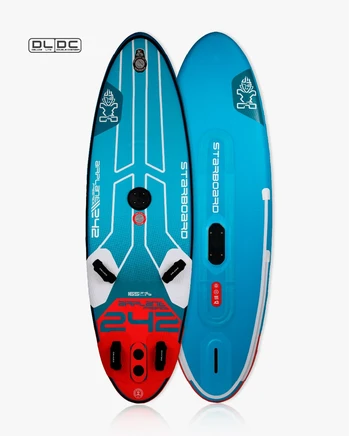


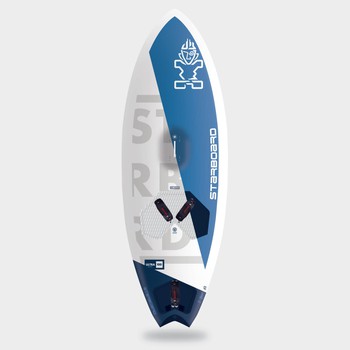

Wir haben die Windsurf Boards der Top Marken von Fanatic, Naish, Tabou und viele mehr auf Lager!
Lange Zeit dachte man, dass Windsurfen auf aufblasbaren Boards nur zum ruhigen Dahingleiten auf flachem Wasser an einem sonnigen Tag geeignet ist. Aber dank der Fortschritte in der Konstruktionstechnik gibt es jetzt aufblasbare Boards, die auch für das Performance-Windsurfen geeignet sind.
Es gibt einige Unterschiede zwischen den Marken, wie sie ihre aufblasbaren Windsurfbretter herstellen. Auf dieser Seite erklären wir die verschiedenen Technologien und zeigen ihre Vor- und Nachteile auf.
Aufblasbare Boards versus harte Boards
Aufblasbare Boards haben einige klare Vorteile gegenüber harten Boards:
Langlebigkeit. Während bei harten Boards die Nose häufig beschädigt wird, können Sie auf einem aufblasbaren Board immer wieder den Mast einschlagen, ohne ihn zu beschädigen.
Kleines Paket. Du kannst das Brett in einem Rucksack mitnehmen, wo immer du willst. Und es nimmt nicht viel Stauraum in Anspruch.
Preis. Es gibt eine große Preisspanne für aufblasbare Boards. Trotzdem kann man gute aufblasbare Boards für etwa die Hälfte des Preises von harten Boards finden.
Aber auch einige Nachteile...
Steifigkeit. Obwohl die Steifigkeit von aufblasbaren Boards durch neue Konstruktionstechnologien stark verbessert wurde, haben harte Boards ein direkteres Gefühl und eine bessere Leistung.
Halsen. Aufgrund der dicken Rails ist es für aufblasbare Boards schwierig, einen guten Biss für richtige Carving-Halsen zu erreichen.
Wellenreiten. Die dicken und abgerundeten Rails bedeuten auch, dass Schlauchboote nicht zum Wellenreiten geeignet sind.
Das Gewicht. Aufblasbare Boards sind in der Regel etwas schwerer als harte Boards.
Zusammenfassend
Aufblasbare Boards sind die preisgünstigste und problemloseste Art, Spaß beim Windsurfen zu haben. Wenn Sie jedoch Ihre Windsurfing-Fähigkeiten verbessern und neue Grenzen ausloten wollen - sei es im Rennsport, beim Freestyle oder in der Welle -, sollten Sie wahrscheinlich in ein Hartboard investieren.
Board-Typen
Jedes Board hat seinen eigenen Zweck und besondere Eigenschaften.
WindSUP
Hier hat alles angefangen: die Idee, ein aufblasbares SUP-Board mit einem Segel zu versehen. Die zusätzliche Mittelfinne verhindert das seitliche Abdriften. Die Designs sind für Schwachwindbedingungen geeignet. Sie sind nicht für den Einsatz bei gleitendem Wind gedacht oder geeignet.
Einsteiger-Boards
Hier kommen die Vorteile eines aufblasbaren Boards am besten zur Geltung. Die extreme Haltbarkeit und Benutzerfreundlichkeit machen sie zu perfekten Boards für Windsurfeinsteiger. Und wenn die Mittelfinne entfernt wird, können sie Lernende schnell zu ihren ersten Gleiterfahrungen führen. Bei einigen Modellen lassen sich auch Fußschlaufen anbringen.
Freeride-Bretter
Diese aufblasbaren Boards sind für einfaches Gleiten gemacht. Für eine saubere Rumpfform wird die Mittelfinne weggelassen. Die PVC-Schiene verbessert die Wasserabgabe für weniger Widerstand bei höheren Geschwindigkeiten und mehr Grip beim Carven. Diese Boards bieten den einfachsten Übergang zum "echten" (vollwertigen!) Gleitwindsurfen.
Leistungsstarke Bretter
Einige Marken haben aufblasbare Boards für radikalere Zwecke entwickelt, darunter Modelle mit dem Deep Tuttle Finnenkasten-System, das die Verwendung von leistungsstarken Slalomflossen ermöglicht. Für diese Boards werden oft Hochleistungsmaterialien wie Kevlar oder Dyneema verwendet, um ihre Steifigkeit zu erhöhen. Auf diesen Boards wurden Geschwindigkeiten von über 70 km/h gemessen! Leider treibt die Spitzentechnologie auch den Preis in die Höhe...
Konstruktion des Boards
Die Konstruktion eines Boards beeinflusst seine Steifigkeit, sein Gewicht und seine Haltbarkeit. Die Steifigkeit ist sehr wichtig, denn ein steifes Brett hat viel weniger Widerstand als ein Brett, das sich unter der Last des Surfers verbiegt.
Alle aufblasbaren Boards werden aus "Dropstitch"-PVC hergestellt. Dieses Material besteht aus 2 Schichten faserverstärktem PVC, die durch vertikale Fäden verbunden sind (siehe Abbildung unten). Die Länge dieser Fäden bestimmt die Dicke des Boards. Da alle Fäden die gleiche Länge haben, sind die Ober- und Unterseite der aufblasbaren Bretter flach - ohne Konturen. Der Scoop und/oder Rocker des Boards wird durch die Formgebung der Seitenwände und dadurch erreicht, dass die obere Schicht etwas kürzer als die untere Schicht ist.
Es gibt 3 wesentliche Dropstitch-Technologien
Einlagig (SL). Einfach und preisgünstig. Am besten geeignet für Boards, die in der Freizeit leicht beansprucht werden.
Doppellagig. Das Board wird durch eine zusätzliche Schicht aus faserverstärktem PVC-Laminat verstärkt. Schwerer als einlagiges Board, aber viel steifer und haltbarer.
Fusion Composite Dropstitch (FCD). Das beste verfügbare Material. Mehr Fasern, weniger PVC und weniger Leim als bei der doppellagigen Konstruktion. Das macht die Boards leichter, steifer und sehr haltbar.
Einige Marken fügen Stringer mit Kevlar- oder Dyneema-Fasern hinzu, um die Boards noch steifer zu machen. Aber das macht die Boards auch sehr teuer.

Preis vs. Qualität
Ein höherer Preis macht ein Board nicht unbedingt besser. Es gibt jedoch viele billige aufblasbare Boards auf dem Markt, die schlecht gebaut sind und einer mangelhaften Qualitätskontrolle unterliegen. Ein schlecht gebautes Board kann zu lebensbedrohlichen Situationen führen, also seien Sie beim Kauf eines aufblasbaren Boards klug. Wir raten Ihnen, in einem auf Wassersport spezialisierten Geschäft zu kaufen. Dort kann man Ihnen helfen, ein geeignetes und zuverlässiges Brett zu finden, das auch ein gutes Preis-Leistungs-Verhältnis bietet.
Flossenkästen
Der Flossenkasten Ihres Boards bestimmt, welche Flossen Sie verwenden können. Und obwohl die meisten aufblasbaren Boards mit Finnen geliefert werden, haben diese einen großen Einfluss auf Leistung, Nutzbarkeit und Preis. Es lohnt sich also, einen Blick auf die Optionen zu werfen...
US-Box. Die Hartplastikfinnen sind im Lieferumfang des Boards enthalten. Die Finnen sind abnehmbar, und die Finnenbox ist klein. Das macht das aufgerollte Paket sehr kompakt. Ein Nachteil ist, dass die Finnen und der Finnenkasten nicht sehr steif sind. Aus diesem Grund verwenden unsere Elevate Freeride Boards ein Twin Fin Setup: doppelte Finnenfläche für Starkwindbedingungen. Diese Option bietet ein exzellentes Preis-Leistungs-Verhältnis: gute Leistung, bequem, günstiger Preis.
Tiefe Tuttle-Box. Im Inneren des Boards ist ein großer Kunststoffblock einlaminiert, der Hochleistungsfinnen aufnehmen kann. Diese Finnenbox ist steifer als die US-Box, was die Leistung des Boards erhöht. Nachteil: Der große Kunststoffblock erschwert das Aufrollen des Boards. Und der Preis ist höher (hauptsächlich wegen des höheren Preises der Finnen selbst).
Schwert. Einige aufblasbare Anfängerbretter haben eine große einziehbare Mittelfinne. Dies sorgt für eine hervorragende Stabilität und ein gutes Fahrverhalten am Wind. Der Nachteil ist die größere Größe, das höhere Gewicht und der höhere Preis.
PVC-Schiene
Die meisten iWindsurf-Boards haben eine scharfe PVC-Schiene. Dies gibt dem Board mehr Grip auf dem Wasser und hilft, die Seitendrift zu reduzieren. Die scharfe Schiene ermöglicht auch eine saubere Wasserabgabe bei höheren Geschwindigkeiten, wodurch sich das Board zum Gleiten eignet.
EVA-Deckgriff
Der EVA-Schaum, der für den Deck Grip verwendet wird, ist in verschiedenen Qualitäten und Mustern erhältlich. Die meisten Typen bieten viel Grip. Es ist jedoch ratsam, diesen Punkt zu überprüfen, denn ein rutschiges Brett kann den Spaß verderben.
Aufblasbare Boards haben immer ein flaches Deck. Die hochwertigen Unifiber iWindsurf Boards haben ein erhöhtes EVA-Deck, das die gebogene Form eines harten Boards nachahmt und eine bessere Kontrolle und Ergonomie bietet.


